
High Point Open Records Landscape
North Carolina Chapter 132 broadly covers material made or received in public business, regardless of format. That rule does not place every High Point file in one database. City permits remain with High Point, while deeds, tax rolls, estates, and local certificates follow the county tied to the event or parcel. Courts use a statewide portal but retain files at the county clerk.
| Record group | Office that keeps it | Online route | Practical access |
|---|---|---|---|
| Deeds, liens, and plats | Actual county Register of Deeds | Guilford RDLX for Guilford parcels | Web index, office index, and copies |
| Parcel and tax roll | County Tax Department and GIS | Tax CAMA and county GIS | Free search or office property card |
| Court, estate, and divorce files | County Clerk of Superior Court | eCourts Portal | Portal, courthouse terminal, paper file, and copies |
| Birth, death, and marriage | Event-county Register or NC Vital Records | Limited indexes and application services | Eligibility, ID, and copy rules apply |
| Permits and code files | City of High Point | Accela from August 2015 | Portal or legacy email request |
| Jail and correctional data | Guilford Sheriff, NC DAC, or SBI | Separate current lookup systems | Free searches with different scopes |
Access to High Point records is broad, but not absolute. Sealed and expunged cases, juvenile and adoption material, confidential investigation details, protected voter data, motor-vehicle personal data, and controlled vital certificates remain closed or limited. An index may prove that a record exists without opening every field or document image.
Route High Point Records by County
High Point spans Guilford, Davidson, Forsyth, and Randolph counties. The High Point city name or a ZIP code therefore cannot settle custody. The city core is in Guilford, but a parcel beyond that core may send a deed request to another Register of Deeds, a tax question to another county, and an estate file to another clerk. This is the defining geography of local records access.
Use High Point thePOINT to identify the county and parcel before choosing an office. The same address check matters for medical 911 calls because the city routes them to the proper county EMS agency. City Council material, High Point permits, inspections, police files, cemeteries, and staff records stay with the city.
County check. Resolve the exact High Point address in thePOINT before assuming Guilford County holds a deed, tax roll, estate, election file, or EMS record.
Search High Point Deed Records
The Guilford County Register of Deeds records High Point deeds, deeds of trust, satisfactions, liens, plats, assumed names, and vital events. Guilford’s first land record dates to May 4, 1771. The web index is convenient, yet its disclaimer identifies the Greensboro office record as official. Older material can require book and page access rather than a modern name result.
| RDLX control | Input type | Required? | How it works |
|---|---|---|---|
| Search Type | Radio | Default | Standard is active; text and sound-alike modes display as disabled |
| Sort Type | Radio | Default | Sort by name or date |
| Party Type | Radio | No | Choose grantor or grantee |
| Last or Company / First Name | Text | No | Name entry uses uppercase styling |
| Start / End Date | Date pair | No | Pre-1997 dates convert to year-only form |
| Category | Checkbox tree | No | Select all or expand instrument codes |
| Book Type / Book / Page / Suffix | Mixed controls | Conditional | Direct book, page, or file search |
The Guilford land-record search includes old index books, vital search, plat and condominium controls, browse-name tools, and direct file-number access for High Point research. The name index begins at Book 3192; earlier deeds remain reachable through book and page. Plats run from Book 70 forward, while condominium records run from Book 3 forward. A result may show grantor, grantee, instrument type, recording date, book and page, instrument number, and an image link where available.
Recording fees for High Point instruments under §161-10 differ from copy fees. A deed of trust costs $64 for the first 35 pages plus $4 for each added page. Deeds and other instruments cost $26 for the first 15 pages plus $4 for each added page. A certified copy is $5 for its first page and $2 for each added page. Uncertified copies cost $0.05 per page in person or $1 per page by mail.
Note: No single online start year is established for High Point RDLX records, so use old index books or the office for gaps.
Read High Point Property Records
High Point property tools separate three keys that often get confused. A parcel number identifies the tax unit. A situs address is the physical site. A mailing address is where the owner receives tax mail. The mailing address can help distinguish names, but it does not prove where anyone lives. Owner and occupant are not the same fact.
The Guilford Real Property Search accepts owner, location, address, parcel, and related modes. The listing tool may require parcel numbers without leading zeroes. A High Point property card can show owner names, owner mailing and situs addresses, legal description, acreage, deed book and page, transfer details, values, building traits, and tax jurisdiction. The county GIS adds boundaries and map layers; the tax office can supply an office record card when the web tool fails.
For a past High Point parcel trail, move from the current tax card to its deed reference, then trace grantors and grantees backward in the proper county index. A grantor transfers an interest; a grantee receives it. Plats, which are recorded parcel maps, can bridge street changes and older lot descriptions.
High Point Court Record Channels
High Point cases belong to North Carolina District and Superior Courts in the proper county. Guilford matters fall in District 24. The eCourts Portal accepts a party name or case number through Smart Search. Advanced filters can narrow by county, location, case type, status, and date. Separate tools cover hearings, judgments, and eligible payments.
A High Point result may include the case number, caption, party roles, filing date, court location, type, status, hearings, charges, and disposition when open. A docket is the court’s event log for a case. It does not mean each filed document can be downloaded. Sensitive family documents may stay restricted even when the case itself appears.
| Channel | Best use | Limit or cost |
|---|---|---|
| eCourts Portal | Party, case, hearing, and judgment discovery | Images are not uniform |
| High Point courthouse terminal | Criminal searches by defendant, case, victim, or witness | Must be used at the courthouse |
| Paper file | Inspect material kept by the county clerk | Protected material stays closed |
| NCAOC copy request | Obtain available court copies | No inspection fee; copies are $0.25 per page |
North Carolina court-record instructions explain High Point terminal, paper-file, and copy access. Sealed matters, expunged cases, juvenile proceedings, adoption records, and protected details do not open through the portal. Probate and estate administration belongs to the Clerk of Superior Court, not the Register of Deeds.
High Point Vital Record Limits
High Point birth, death, and marriage certificates for a Guilford event can be ordered through the Register of Deeds, while NC Vital Records holds statewide series. Divorce decrees come from the court clerk; the state’s divorce certificate is not a substitute for the case file. For an event in another part of High Point, use the county where it occurred.
North Carolina does not use a simple rule that every birth closes for one set term and every death for another. Sections 130A-93 and 130A-99 control sensitive fields, inspection, and certified-copy eligibility. State holdings begin in 1913 for births, 1930 for deaths, 1962 for marriages, 1958 for divorces, and 2001 for fetal deaths. High Point historical indexes, Archives records, Register terminals, newspapers, cemetery material, and restricted FamilySearch images supply other routes.
The Guilford vital-record request page leads to the current application and payment rules.
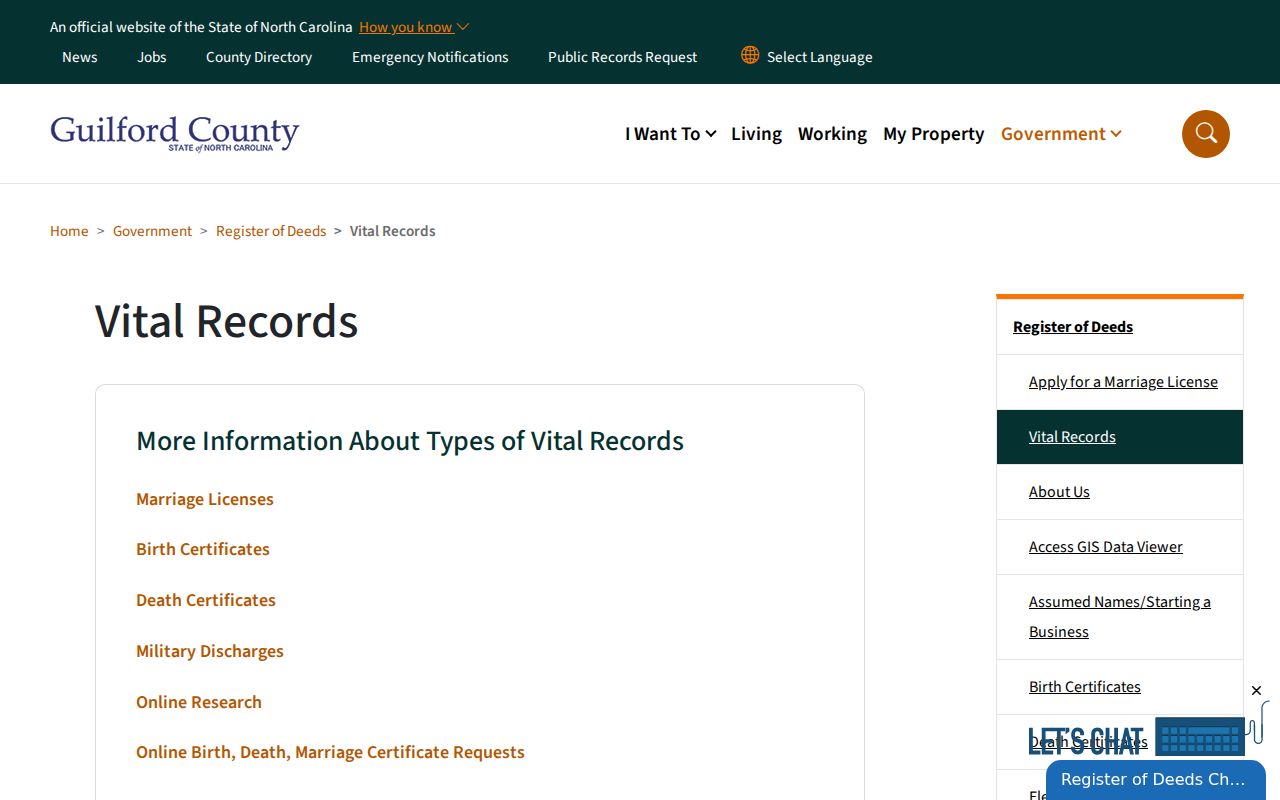
The captured Guilford form for a High Point event shows why a name alone is not enough. Applications can require the event type, names on the record, date and place, parents or spouse when relevant, requester relationship, identification, signature, copy type, quantity, and delivery details. Guilford certified copies cost $10; uncertified copies cost $0.05 in person or $1 by mail.
High Point Public Records Custodians
Choose an office by the record, not by convenience. City Hall cannot issue birth or death certificates or divorce decrees. County and state offices also maintain their own forms, access limits, and copy channels. These four contacts cover the main Guilford and statewide routes documented for High Point.
Guilford Register of Deeds
325 E. Russell Ave., Room 155
High Point, NC 27260
P.O. Box 1467
guilforddeeds@guilfordcountync.gov
336-641-7556
Weekdays, 8 a.m. to 5 p.m.
Guilford Clerk of Superior Court
505 E. Green Drive
High Point, NC
336-822-6700
Weekdays, 8:30 a.m. to 12:45 p.m. and 1:45 to 5 p.m.
Exterior drop box available at all hours
High Point City Clerk
General city-record custodian
Oral requests and anonymous portal requests accepted
City request portal
NC Vital Records
1915 Health Services Way
Raleigh, NC 27607
1-800-662-7030
Statewide applications and amendments
Mail is also available for High Point requests where an office supplies a form or copy process. The Guilford Register accepts checks or money orders payable to Register of Deeds, as well as cash of $50 or less at the counter. Court paper files and terminals remain important when a statewide web result lacks the needed document.
High Point Custody Record Boundaries
One High Point custody search cannot cover every system. NC Department of Adult Correction data covers state correctional history and status. The State Bureau of Investigation registry has its own statutory scope and warnings, while federal custody belongs to a separate federal locator. The Guilford County inmate search is the local starting point for a current booking.
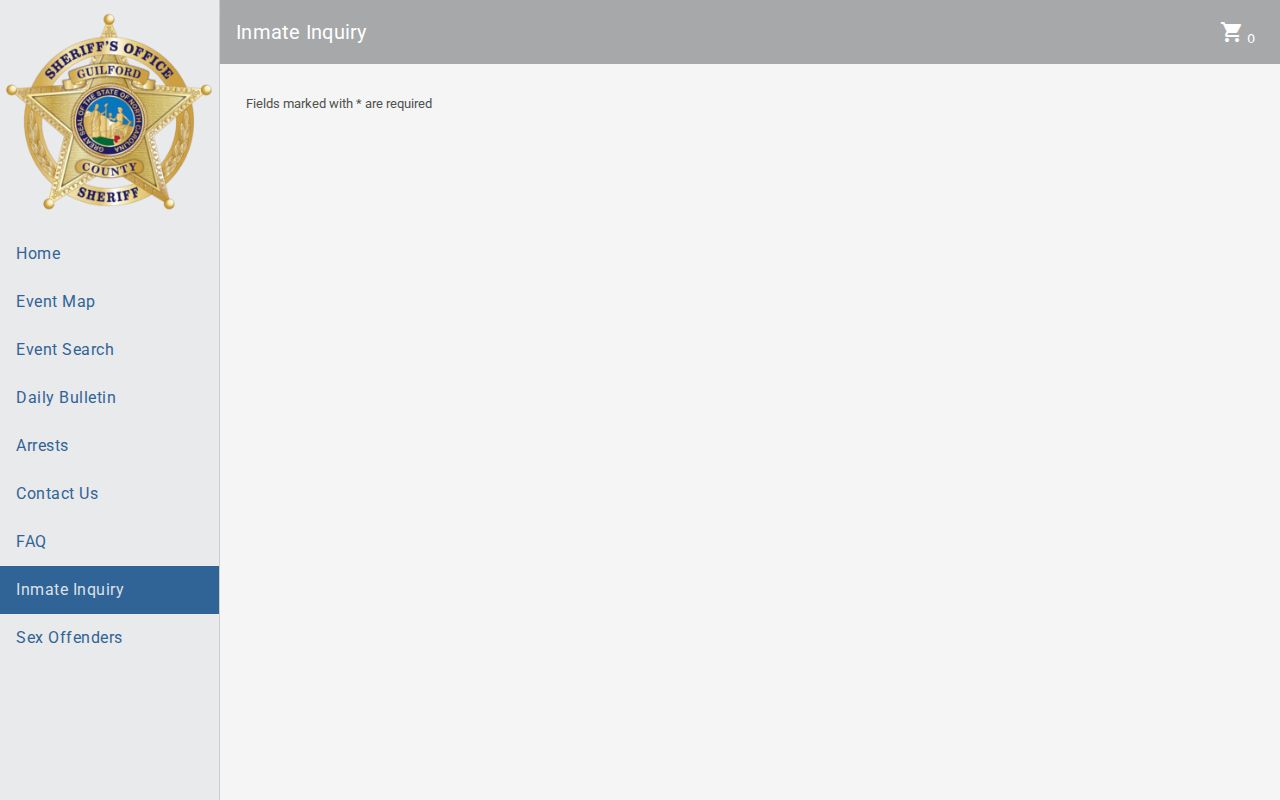
The High Point result can show custody status, booking, charges, and bond. It is not a full lifetime court or correctional history, and a missing name does not settle what another system holds.
The North Carolina SBI registry supports name and location-based searches.
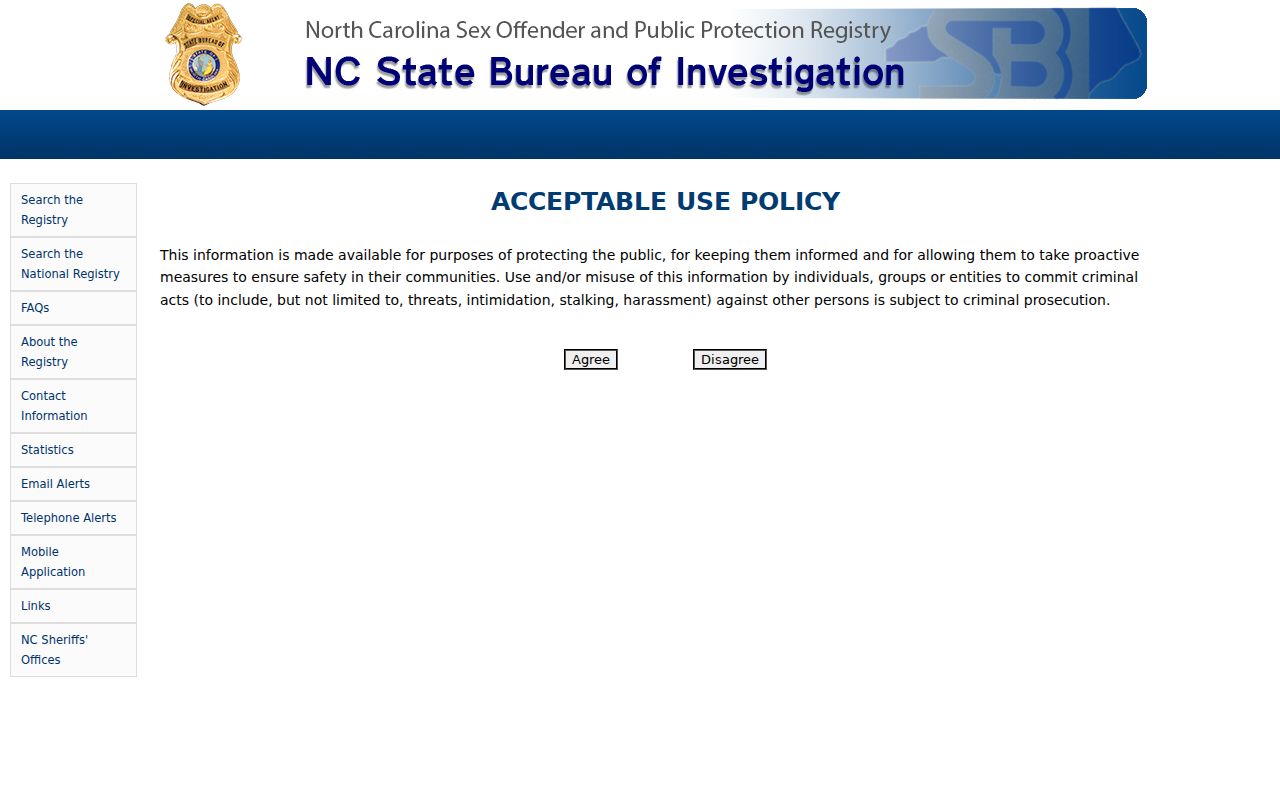
The High Point registry result can present a registrant, offense, photo, and address within its legal scope. Its purpose and warnings matter. It should not be treated as a substitute for court files, the county jail, or NC correctional data.
High Point 911 Records Expire Fast
High Point 911 audio is purged after 90 days. That short window makes prompt action more useful than a broad request made later. A request can identify an Event ID, Police Report Number, or Fire Run Number. Without one, provide the date and time, caller telephone, street address, and, when useful, a business name, cross streets, and the nature of the incident.
High Point computer-aided dispatch data and audio are different records. Section 132-1.4(c)(4) permits alteration or redaction of a natural voice and identifying facts about callers, victims, and witnesses. Medical calls may belong to Guilford, Davidson, Forsyth, or Randolph EMS based on the exact address. Incident and accident reports route from the city request service, while confidential investigation material can remain withheld.
Note: A 911 audio request made after the retention window cannot recover audio that the city has already purged.
High Point Records Have Gaps
Digital access has firm edges. High Point’s Accela development search covers August 2015 forward. Older permits, inspections, certificates of occupancy, site plans, variances, special uses, annexations, zoning changes, and code files require a legacy request to the Building Department. The email subject must say “Legacy Record Request” and identify the property address and exact documents. Fire-code and erosion matters instead use the public-record portal.
The older High Point civic trail is uneven too. City Council minutes begin in 1859 but have a long gap late in the nineteenth century. Guilford land books reach back to 1771, while High Point’s first city directory appeared in 1908 and the local Heritage Research Center holds print directories from 1910 forward. The State Archives county guide, library staff, microfilm, and office books are essential when an online search ends.
- Index
- A finding aid that points to a record; it may not include the document image.
- Certified copy
- An official copy authenticated by the office that holds the record.
- Custodian
- The city, county, court, or state office responsible for a specific file.
- Exemption
- A law that withholds a record or field even when the wider record set is open.
Protected High Point Record Details
Open government does not erase privacy rules. Personnel files stay closed except for fields that another law makes public. Court seals, expunctions, juvenile matters, and adoptions restrict access. Motor-vehicle personal data falls under the DPPA. Vital certificates and voter identifiers follow their own statutes. Section 132-1.10 also allows qualifying Social Security number and identifier redaction.
Guilford reports that it was the first North Carolina county to redact Social Security numbers from land records on a wholesale basis. Session Law 2025-79 adds a narrower current limit: government generally may not compel or disclose identifying data about members, donors, and volunteers of qualifying nonprofits, subject to statutory exceptions. It is not a broad right to delete a person from all official files.
Lawful access never permits stalking, threats, impersonation, identity theft, or harassment. Verify payment demands and copy offers through the named government office. Overpriced deed letters, false court-payment calls, and property-fraud pitches can imitate official notices. Preserve the message, caller details, URL, receipts, and transaction data when reporting a suspected scam.
Request High Point Public Records
A Chapter 132 request does not have to be written. High Point cannot require a name, reason, or North Carolina residency when purpose is not legally relevant. The city portal lets an anonymous requester keep a reference number for status checks. Electronic uploads are free. Physical charges include $5 media, $0.07 black-and-white pages, $0.10 color pages, and varying map costs.
- Name the custodian. Identify the city department or resolve the address county before sending the request.
- Describe the record. Give a record type, date range, address, case or report number, and the department likely to hold it.
- Use the best channel. Inspect an index first, then submit orally, through the portal, by the office form, or by mail as that custodian allows.
- Keep the tracking detail. Save the anonymous city reference number and answer a narrow clarification request when needed.
- Choose delivery and copies. Inspect at reasonable times, accept a free electronic upload, or approve stated physical and certification charges.
- Challenge a denial carefully. Ask for the statutory basis, consider mediation under §7A-38.3E, and review civil enforcement under §132-9.
Section 132-6 says access must come “as promptly as possible,” but North Carolina sets no universal number of days. Section 132-6.2 permits actual media and copy costs, plus a special charge based on real extensive technology or clerical work. Narrowing an overly broad request can reduce both delay and expense without giving up the record sought.
The High Point records-request service shows the city’s intake, tracking, and fee route.
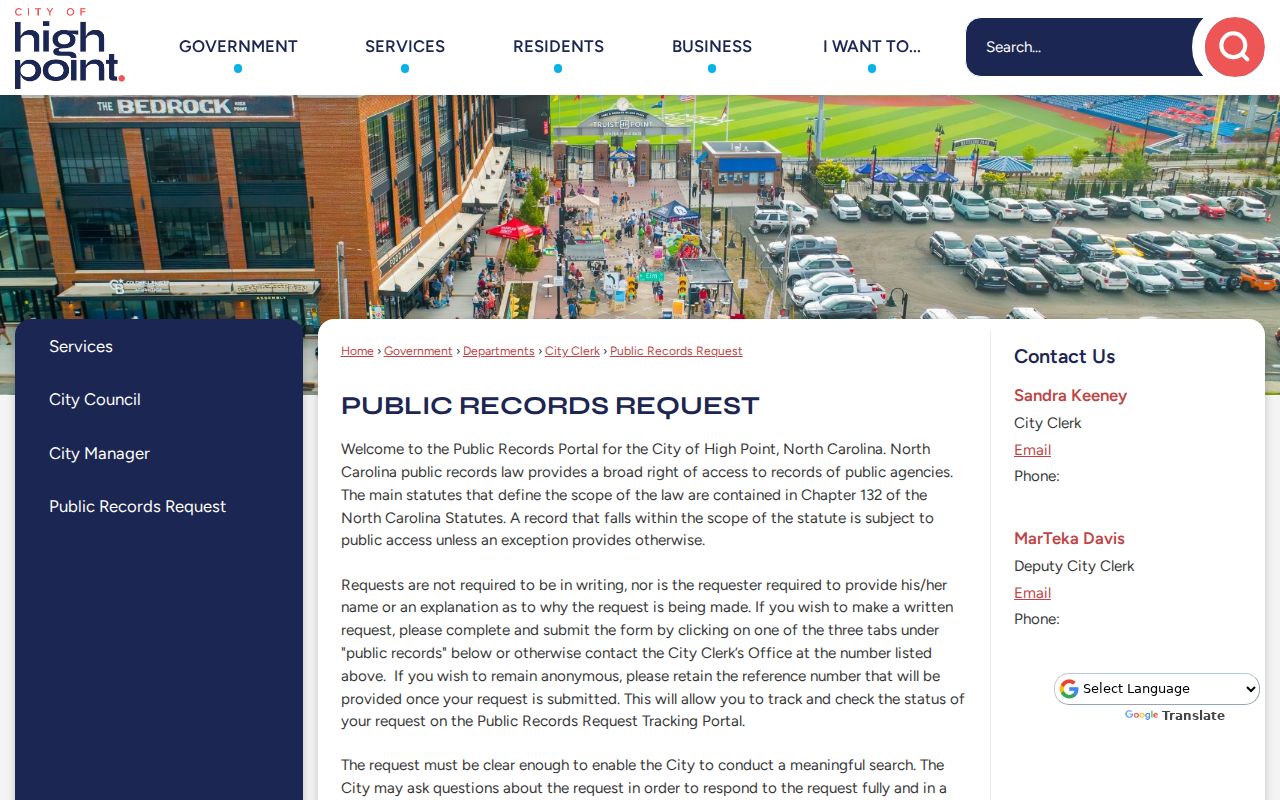
The portal is for city-held material. Deeds, court files, vital certificates, and county custody data should go to their named custodians instead of being sent to City Hall.
Lawful use. Inspect records for lawful personal research, civic review, family history, estate work, or scam verification. Never use a record to stalk, threaten, harass, or harm anyone.